Week One Is a Preview: How Onboarding Friction Quietly Sets Your Retention Trajectory
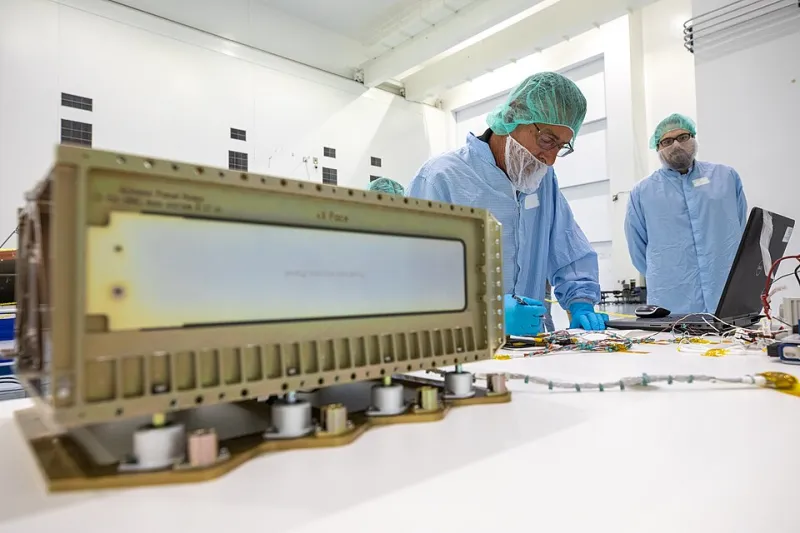
Photo: Cory Huston, Public domain, via Wikimedia Commons
Every engineering leader has watched it happen. A strong hire signs the offer, arrives with genuine enthusiasm, and then spends eleven days fighting a broken setup script, chasing down credentials, and reverse-engineering a service nobody has documented since 2022. By the time they ship their first meaningful change, something has quietly shifted. They are not angry. They are recalibrating — downward.
The industry has a term for the moment this becomes visible: regretted attrition, usually six to eighteen months later. What it lacks is a term for the cause. Call it the onboarding cliff — the gap between the experience a new engineer expected and the one your tooling, documentation, and social systems actually deliver.
The First Week Is a Signal, Not a Ritual
New hires are, for a brief window, the most honest auditors your organization will ever have. Veterans have normalized the workarounds. Managers have stopped seeing the friction. But someone encountering your system for the first time experiences every broken assumption at full intensity.
That makes onboarding a diagnostic instrument. When a new engineer cannot get the local environment running without three Slack escalations, that is not a personal failing — it is evidence that your setup depends on tribal knowledge. When they spend two days figuring out who owns a service, that is an ownership graph problem wearing an onboarding costume.
Organizations that treat week one as a measurement window, rather than a rite of passage, learn things their dashboards cannot tell them.
Where the Friction Actually Lives
In conversations with engineering managers across US technology companies — from Austin startups to East Coast enterprise shops — the same friction points recur with remarkable consistency:
Environment setup. The single largest predictor of first-week frustration. If setup takes more than a day, every subsequent impression is discounted. If it requires a person rather than a script, you have documented a dependency, not a process.
The invisible map. New engineers need to know how decisions get made, not just what the architecture diagram says. Who reviews what? Which meetings matter? Where do proposals go to die? Without this map, productivity stalls even when technical access is complete.
The first-commit problem. The gap between "environment works" and "I shipped something real" is where confidence either builds or erodes. Teams that deliberately stage a meaningful first contribution — something small but genuinely useful — convert onboarding into momentum. Teams that don't leave new hires in limbo.
Ambiguity about expectations. Engineers who are unsure whether they are meeting the bar in week three tend to assume the worst. Ambiguity is not neutral; it is a tax paid in confidence.
The Compounding Math Nobody Runs
The direct cost of a slow onboarding ramp is easy to estimate and routinely ignored. If a fully-loaded senior engineer costs the market rate of roughly $250,000 a year and takes four months to reach meaningful productivity when they could have reached it in six weeks, that is roughly $60,000 of sunk capacity per hire. A team of fifty hiring twelve engineers a year is burning over $700,000 annually in ramp alone.
The indirect costs are larger and less visible. Engineers who form their impressions in a frustrating first week carry a baseline skepticism into every subsequent decision. Some leave — and replacing them costs, by common US industry estimates, one-and-a-half to two times annual salary once recruiting, ramp, and lost context are counted. Others stay and quietly disengage, which is harder to measure and possibly more expensive.
A Practical Audit Framework
You do not need a dedicated program to fix this. You need a disciplined audit, run once or twice a year:
- Run the setup yourself. A senior leader provisioning a laptop and following the onboarding doc verbatim will surface more defects in one afternoon than a year of surveys.
- Instrument the ramp. Track time-to-first-commit and time-to-first-production-deploy as first-class metrics. Trends matter more than absolutes.
- Interview every departing hire. Exit conversations about onboarding are unusually candid and cheap to conduct.
- Assign an onboarding buddy with actual time allocated. Unfunded mentorship is a polite fiction.
- Close the loop publicly. When a new hire's friction produces a fix, say so. It signals that raising problems is safe and worthwhile.
The Retention Connection
Attrition is rarely a single decision. It is the accumulation of small recalibrations, and the first week supplies more raw material for that ledger than any other period of tenure. An engineer who is handed a working environment, a clear map, and a genuine first win within days arrives at month six with a fundamentally different relationship to the organization than one who spent their opening days as an archaeologist.
The onboarding cliff is not inevitable. It is an artifact of neglect — and neglect, unlike architecture, is something leadership can fix this quarter.