Layers All the Way Down: How Abstraction Infrastructure Quietly Becomes Your Worst Bottleneck
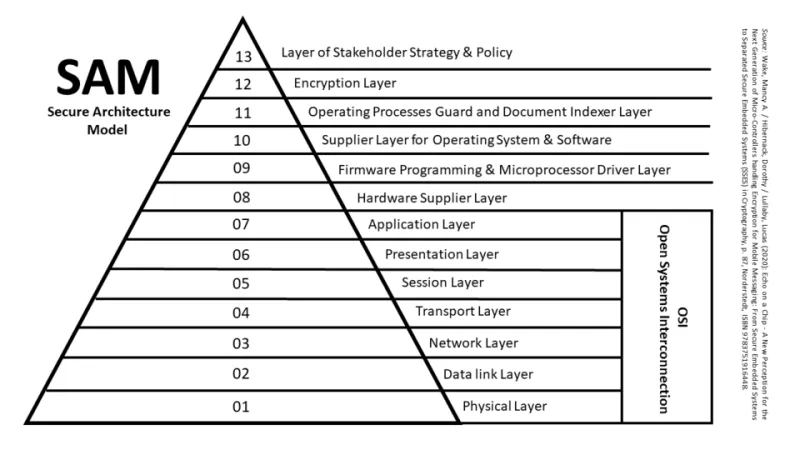
Photo: Mancy A. Wake / Dorothy Hibernack / Lucas Lullaby, CC0, via Wikimedia Commons
Every abstraction layer begins with a reasonable premise. Hide the complexity, expose a clean interface, let engineers work at a higher level of thought. The ORM removes the SQL. The API gateway removes the service topology. The wrapper library removes the vendor SDK. On paper, each layer represents a net gain in developer productivity. In practice, each layer is also a bet — and like most bets made at scale, the odds shift over time.
The problem is not that abstraction is wrong. The problem is that abstraction accumulates interest.
The Promise and the Price Tag
When a mid-size engineering organization adopts an ORM, the immediate productivity gains are real. Junior engineers can interact with a relational database without deep SQL fluency. Query composition becomes faster. Schema changes feel safer. For the first six months, the abstraction earns its keep.
Then the application grows. Query patterns diversify. A product team requests a report that requires a join across five tables with conditional aggregations. The ORM's query builder produces something technically functional but structurally inefficient — seventeen round trips where three would do. A senior engineer patches it with a raw query escape hatch. Then another engineer adds a second escape hatch for a different edge case. Within a year, the ORM is simultaneously the default interface and an obstacle that experienced engineers route around on a case-by-case basis.
This pattern — initial productivity, gradual leakage, selective bypass — repeats across virtually every category of abstraction layer. API gateways that were introduced to centralize authentication and rate limiting become chokepoints when traffic patterns shift. Wrapper libraries that smoothed over a third-party SDK's rough edges become liabilities when the underlying SDK ships breaking changes that the wrapper wasn't designed to absorb.
The abstraction doesn't fail catastrophically. It fails gradually, in ways that don't show up in sprint retrospectives until the damage is substantial.
Leaky Abstractions at Production Scale
Joel Spolsky's Law of Leaky Abstractions, articulated over two decades ago, remains one of the most under-applied principles in modern software engineering. The law is simple: all non-trivial abstractions leak. The details they were designed to hide eventually surface — in error messages, in performance characteristics, in debugging sessions that require engineers to understand both the abstraction and the underlying system simultaneously.
At production scale, leaky abstractions carry compounding costs. Consider an API gateway deployed across a distributed architecture. The gateway abstracts service routing, authentication, and request transformation. When latency spikes in production, the debugging process requires engineers to instrument the gateway layer, correlate its behavior with upstream service logs, and distinguish between gateway-introduced overhead and service-level degradation. Engineers who joined the organization after the gateway was established often lack the foundational knowledge to debug beneath it effectively. The abstraction that was supposed to democratize access to the architecture instead concentrates debugging capability in a shrinking pool of senior engineers.
This is the cognitive overhead cost that rarely appears in architectural decision records. It is not just a performance tax — it is a knowledge tax, levied most heavily on the engineers least equipped to pay it.
When the Abstraction Becomes the Dependency
One of the more insidious consequences of mature abstraction layers is the organizational dependency they create. Teams that have built workflows, tooling, and institutional knowledge around an abstraction layer become resistant to changing it — not because the abstraction is good, but because the cost of migration appears higher than the cost of continued use.
This is how engineering organizations end up maintaining ORMs that no longer fit their data access patterns, API gateways that have become single points of failure, and internal SDK wrappers that predate the current engineering team by several years. The abstraction outlives its original rationale and becomes load-bearing infrastructure — too embedded to remove, too problematic to ignore.
The teams most vulnerable to this dynamic are those that inherited their abstraction layers rather than designed them. When the original context for an architectural decision is lost, the decision itself becomes difficult to revisit. Engineers maintain the abstraction not because they understand its value, but because they cannot fully assess the consequences of removing it.
Right-Sizing Abstraction Before It Crystallizes
The solution is not to avoid abstraction — it is to treat abstraction layers as first-class architectural assets that require ongoing evaluation rather than one-time decisions.
Several practices support this discipline in practice.
Establish abstraction budgets. Every abstraction layer should have a defined scope of responsibility and explicit boundaries beyond which it will not expand. An ORM that handles standard CRUD operations is a bounded abstraction. An ORM that is gradually extended to handle reporting, analytics queries, and caching is an abstraction that has exceeded its budget and should be decomposed.
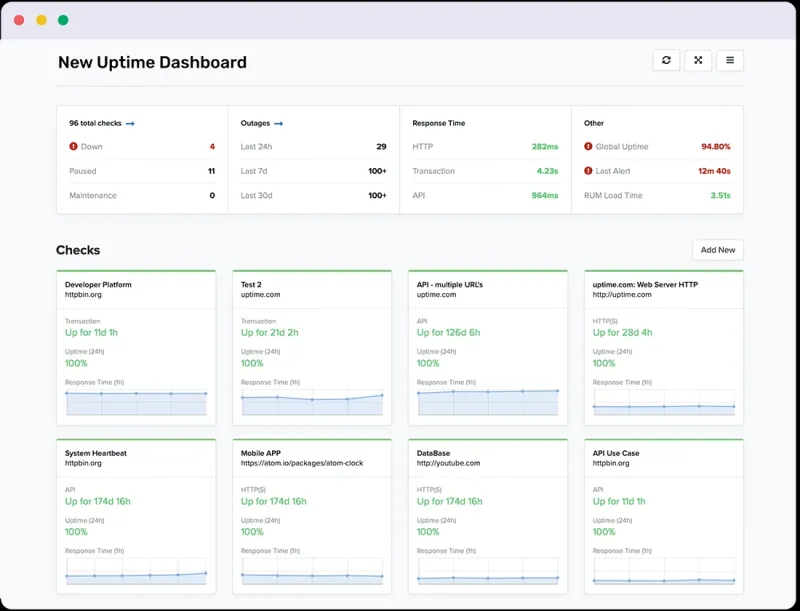
Instrument the seams. The performance characteristics of an abstraction layer should be as visible as the performance characteristics of the application itself. Latency introduced by an API gateway, query count inflation from an ORM, and serialization overhead from a wrapper library should all be tracked explicitly. What gets measured gets managed — and abstraction layers that are not instrumented tend to accumulate invisible costs.
Normalize bypass patterns deliberately. Every abstraction layer will eventually require escape hatches. The question is whether those escape hatches are ad hoc workarounds or intentional design features. Treating bypass patterns as first-class citizens — documenting when they are appropriate, reviewing them during code review, and tracking their frequency — provides an early signal that the abstraction is no longer serving its original purpose.
Conduct abstraction retrospectives. Alongside incident reviews and architecture reviews, engineering organizations benefit from periodic evaluations of their abstraction layers. Has the abstraction reduced cognitive overhead, or has it shifted that overhead to a different set of engineers? Has the performance tradeoff remained acceptable as traffic has scaled? Are the engineers who maintain the abstraction still present on the team?
The Accountability Gap
Abstraction layers fail in part because accountability for them is diffuse. The team that introduced the ORM has moved on. The engineer who designed the API gateway is now an architect with limited time for operational concerns. The wrapper library is maintained by whoever has bandwidth, which often means it is effectively unmaintained.
Engineering leaders who want to manage abstraction debt effectively need to assign explicit ownership to shared infrastructure components. An abstraction layer without an accountable owner is an abstraction layer in slow decline.
Building smarter, in this context, means resisting the temptation to treat abstraction as a solved problem the moment it ships. The layers that accelerate development today are the layers that can constrain it tomorrow — and the difference between those outcomes is sustained, deliberate stewardship.